
A single production can create a strong horizontal film and a useful library of vertical social content. But it only works when both formats are treated as real deliverables from the start.
The common failure is simple: shoot a 16:9 master, finish the edit, then ask someone to crop it into 9:16. Sometimes that works. Often the subject is pushed against the edge, important action disappears, graphics become unreadable, and a patient brand-film opening becomes a weak social hook.
The better approach is to plan one story system with several outputs.
Begin with a deliverable matrix
Before the shot list, write down every version the production needs to create. For each one, define:
- Platform or placement
- Aspect ratio
- Target runtime
- Audience
- Opening hook
- Core message
- Call to action
- Captions and sound-off requirements
- Delivery deadline
A simple campaign might include:
- A 90-second 16:9 brand film for the website and YouTube
- A 30-second 9:16 campaign cut for Reels and TikTok
- Three 15-second vertical clips, each built around one idea
- A square or 4:5 version for selected paid placements
- Clean versions without captions for future re-use
This list affects interview questions, framing, production time, graphics, music, and the number of edits. If it appears only after filming, the most valuable social moments may never have been captured.
Decide what should be shared and what should be unique
Not every shot needs to work in every format.
Some material can be captured once and framed with enough room for both horizontal and vertical edits. Other material should be recorded specifically for 9:16. A wide architectural reveal may belong only in the main film; a direct-to-camera answer may deserve a dedicated vertical take.
Plan three categories:
- Shared shots: compositions that remain strong in both crops
- Horizontal-only shots: wides, group action, landscapes, and complex movement
- Vertical-only shots: direct address, tall spaces, portraits, phone interactions, and social hooks
This is more reliable than forcing every frame into a compromise composition.
Frame interviews for both formats
Interviews are often the easiest material to version, provided the composition is planned.
Keep the speaker close enough to centre that a vertical crop does not lose their eyeline. Avoid placing essential objects at the far edge of a wide frame. If the final film uses an interviewer off camera, check how that eyeline feels in the narrow crop.
When the vertical version needs to feel native rather than repurposed, record an additional take with the speaker addressing the phone-format audience more directly. The words and performance may need to be tighter even when the message is the same.
Capture social hooks deliberately
A website viewer may arrive ready to watch a 90-second film. A person moving through a feed has given you no such permission.
For each planned social edit, identify the first visual and first line before the shoot. Useful hook structures include:
- A clear problem the audience recognises
- A surprising result or contrast
- A direct question
- A strong human moment
- A visual that creates immediate curiosity
- A specific promise about what the viewer will learn
Do not rely on a logo animation or slow establishing shot to do this job. Those moments may work beautifully later in the edit, but the social opening needs to earn the next second.
Shoot b-roll with the crop in mind
For action and detail shots, capture variations rather than one “safe” master.
- Hold some compositions wide enough for reframing.
- Record dedicated vertical close-ups and movements.
- Allow clean space for titles and captions.
- Keep important hands, faces, products, and signage away from uncertain crop edges.
- Hold each shot long enough to support different edit rhythms.
- Capture transitions and cutaways that can open or close short versions.
If a camera supports open-gate recording, it can provide extra reframing flexibility. It does not replace intentional composition: a technically available crop is not automatically a good shot.
Treat text and graphics as format-specific
Horizontal lower thirds rarely fit a vertical frame without redesign. The same is true for diagrams, subtitles, end cards, and calls to action.
Design with platform interfaces in mind. Captions and key text need safe space away from usernames, descriptions, buttons, and navigation overlays. Keep lines short enough to read on a phone and test the work at actual mobile size.
Build the graphic system once, then create layouts for each aspect ratio. That preserves the brand while respecting the screen.
Worked example: a crop or a new composition?
This original studio teaching layout puts a calibration carton on the left and a separate explanation on the right. Both elements fit in the wide frame. It is a deliberate example, not client work or an AI result.
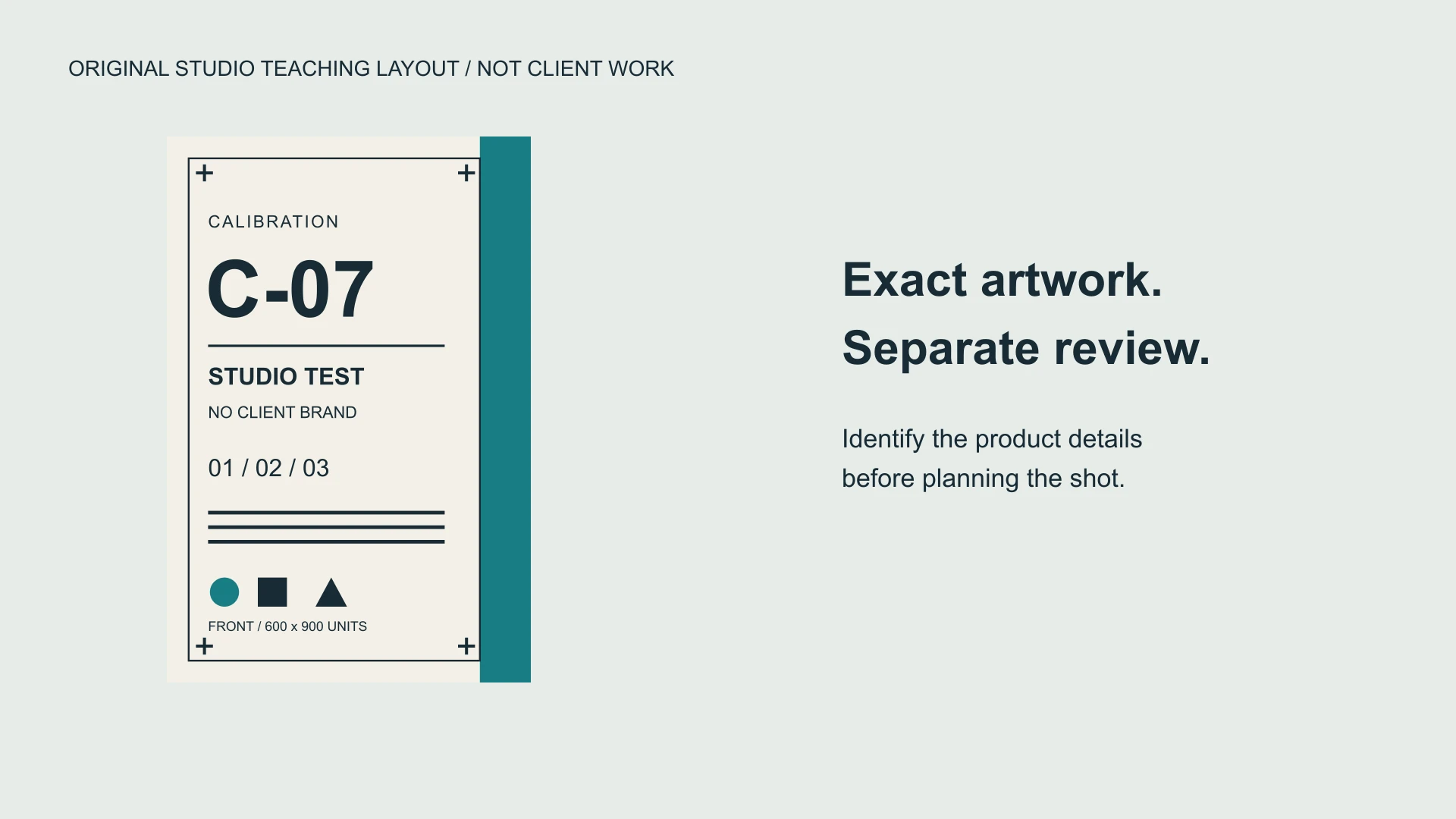
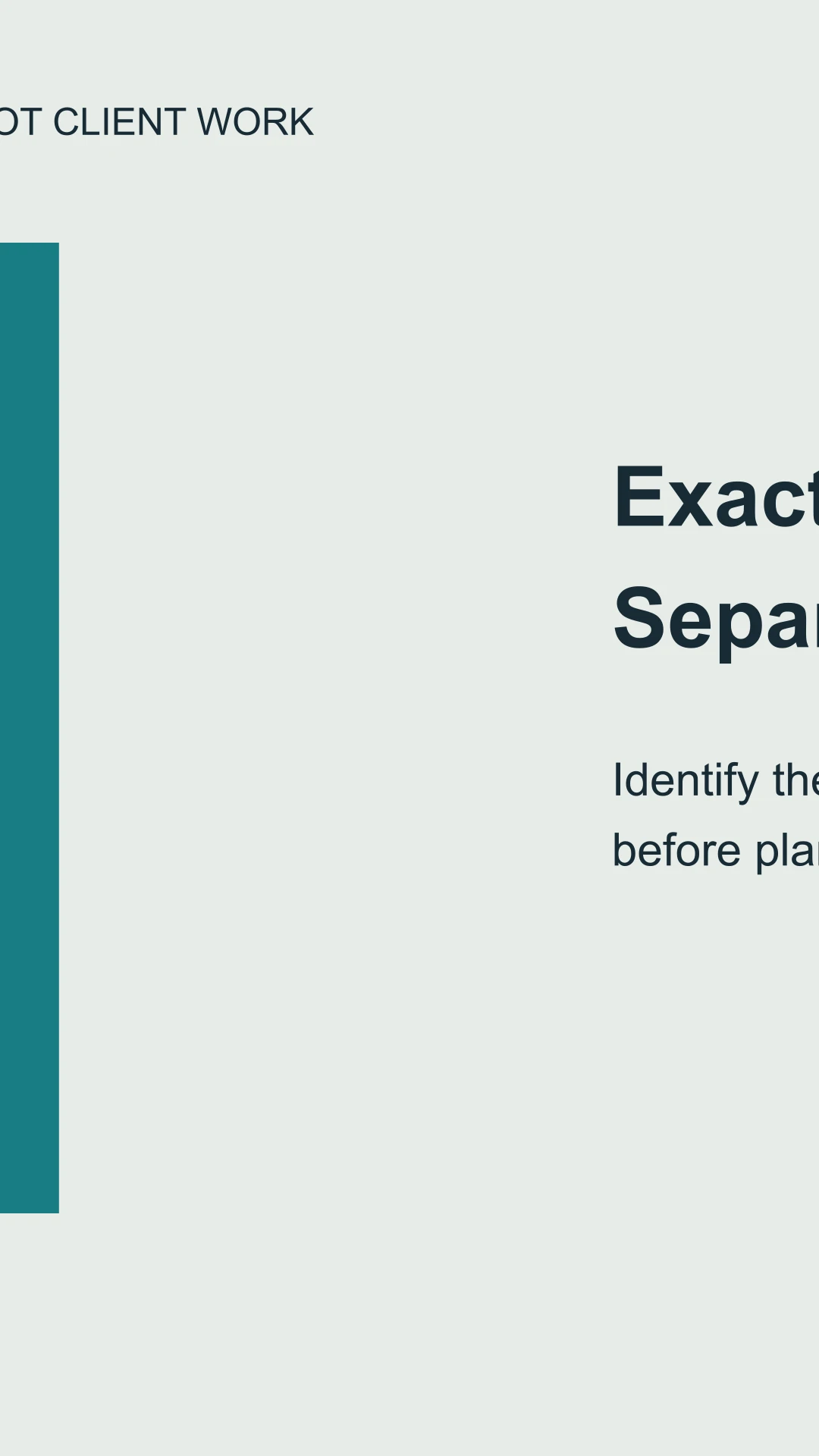
Actual centre crop. A centre crop to 9:16 keeps only the middle of this wide image. Here, it cuts off most of the carton and the explanation. This uses the original wide composition, with its elements left in place.
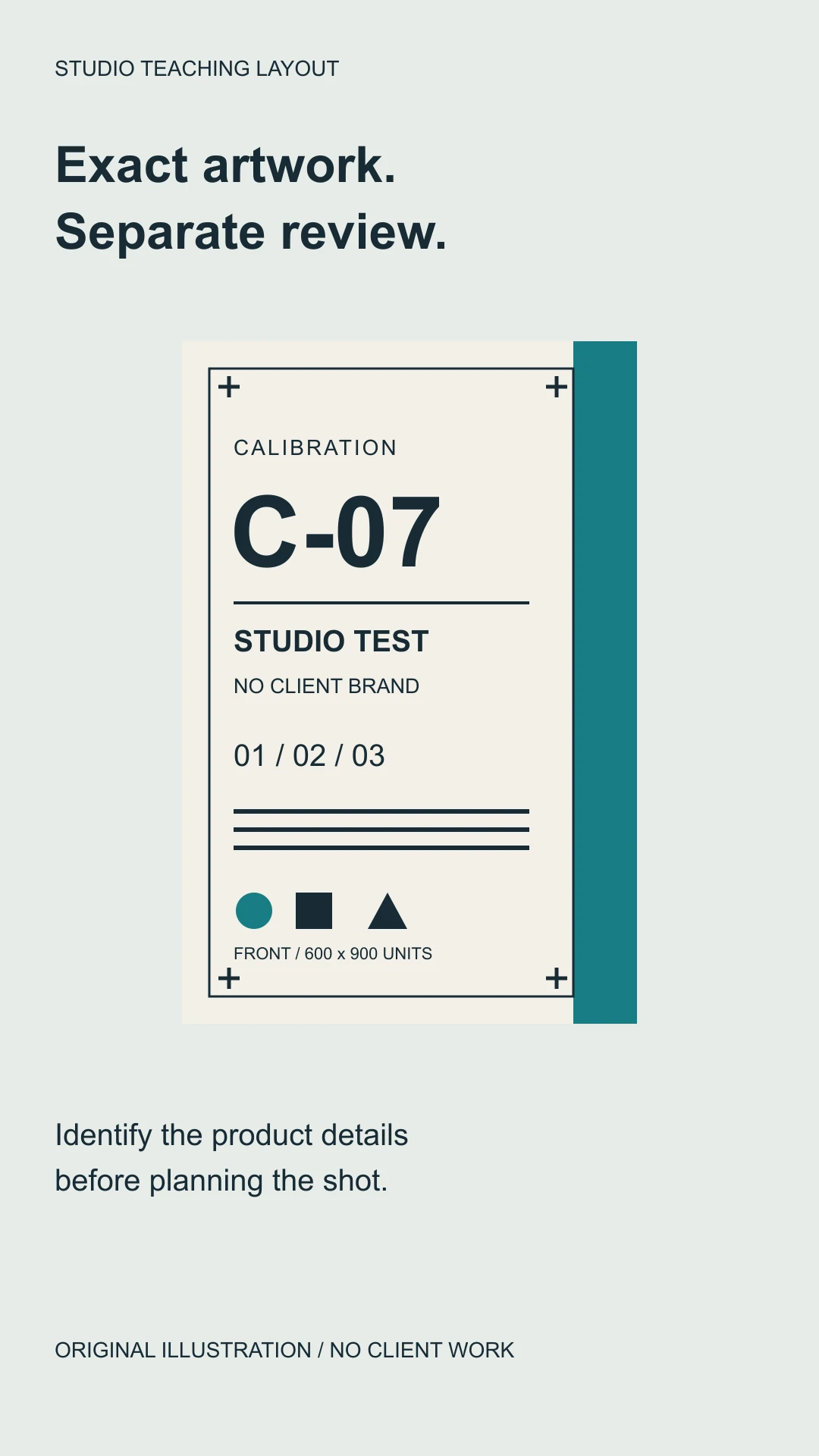
Separately planned vertical layout. The 1080 × 1920 version places the headline above the carton and the explanation below. It uses the same artwork and wording, arranged for the taller frame. Changing the layout keeps both elements visible.
A crop can work for other compositions. Here, the requirement is to keep the carton and its explanation together. The margins are illustrative, not universal platform safe areas. Before production, name the elements that must stay visible and whether graphics can move independently. Add those requirements to your production brief.
Edit for the viewing context
A vertical cut should not simply be the same timeline with the sides removed.
The social version may need:
- A different opening
- Shorter pauses
- Earlier context
- More frequent visual change
- Burned-in captions
- A platform-specific call to action
- A clean loop or decisive ending
That does not mean every social edit must be frantic. Calm, sensitive work can perform in a feed when the opening is clear and every moment earns its place. Lucid Lab’s vertical portfolio includes public-information and community stories where trust matters more than noise.
Agree the delivery package
Use file names that identify the campaign, message, platform, ratio, runtime, caption state, and version. Ask for a delivery list such as:
- 16:9 master, captioned and clean
- 9:16 campaign cut, captioned and clean
- Individual vertical clips
- Thumbnail or poster frames where included
- Textless or music-free versions where future localisation is expected
- Caption files when platforms will render captions separately
Also agree how long project files and source footage will be archived. A clear archive plan makes future cut-downs much easier.
The practical rule
One shoot can serve many channels. One edit usually cannot.
Plan the audience, hook, composition, graphics, and call to action for each format before production. Then let the shared story, visual language, footage, and sound make the campaign feel like one body of work.
If your brief needs both a flagship film and social cut-downs, include every intended platform when you contact Lucid Lab. The shot plan can then protect the horizontal story and the vertical opportunity at the same time.